
Whitepaper · from Red Hat
Top considerations for building a foundation for generative AI
Generative artificial intelligence (AI) is a powerful tool for organizations that want to create innovative products, optimize processes, and gain competitive advantages in rapidly changing markets. Based on
- Format
- Whitepaper
- Published by
- Red Hat
- Category
- AI Strategy & Governance
- Added
- 8 Jun 2026
About this whitepaper
Explore new possibilities for business innovation
Generative artificial intelligence (AI) is a powerful tool for organizations that want to create innovative products, optimize processes, and gain competitive advantages in rapidly changing markets. Based on advancements in deep learning and neural networks, it goes beyond predictive AI capabilities by not only processing data, but generating new, original content. Generative AI is reshaping human-machine collaboration, inspiring new approaches to problem solving, and delivering significant business gains across industries.
Worldwide, organizations are building new, innovative applications using generative AI technologies. In fact, 39% are currently investing in generative AI technologies, while another 37% are exploring potential use cases.1 Here are a few of the many use cases for generative AI today:
- Generate forecasts for complex scenarios. Generative AI can analyze historical data, identify patterns, and develop accurate forecasts to aid in strategic planning and risk management.
- Develop personalized marketing. By analyzing data to understand customer preferences and behaviors, generative AI can create personalized marketing materials—including emails, advertisements, and promotions—that maximize engagement and conversion rates.
- Automate and personalize customer service. As the foundation for intelligent chatbots and virtual assistants, generative AI can automatically respond to customer inquiries and interactions, providing personalized, efficient customer service.
Listen or skim
Summaries are generated from this page’s text. Read the full piece for the detail.
More from Red Hat
All 15 →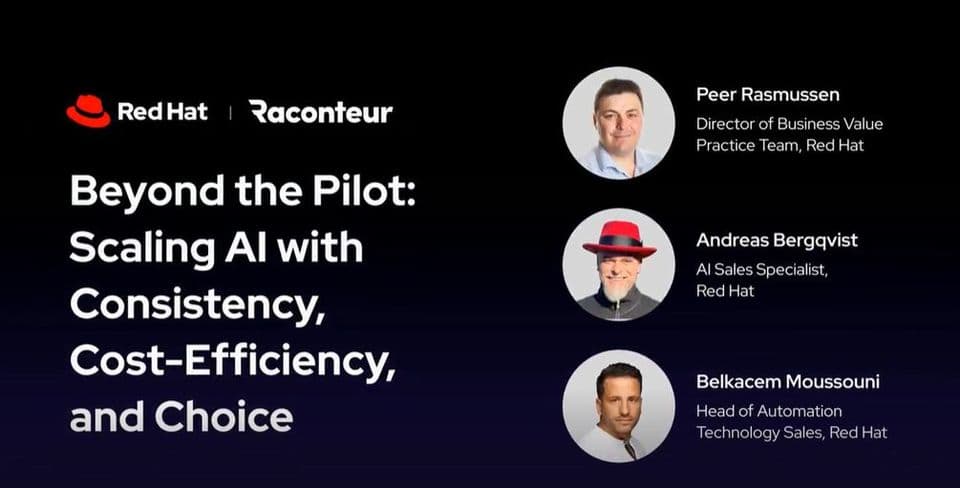
Beyond the Pilot: Scaling AI with Consistency, Cost Efficiency, and Choice
The session focuses on moving past AI experimentation and pilots to address the practical, organizational, financial, and operational challenges of industrializing and scaling AI across enterprises.
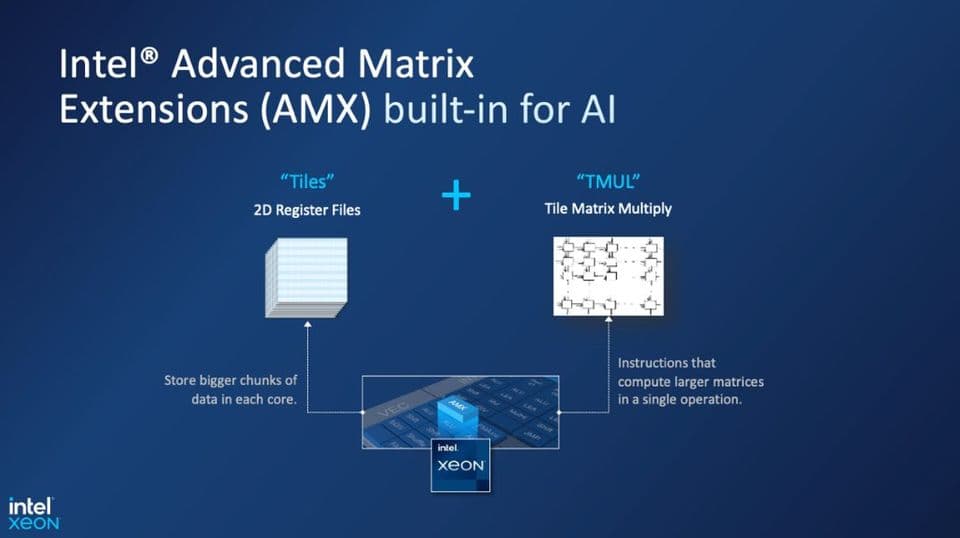
Intel & Red Hat Blog
To bypass high GPU costs and hardware shortages, Red Hat and Intel have combined standard enterprise CPUs with cloud software to offer a simpler, cheaper alternative for running AI tasks.
Artificial Intelligence: Moving from novelty to accountability
Moving AI into production is no longer a technical challenge, it's an operational one. In turn, organisations need a unified platform to build, run and govern AI at scale across hybrid environments, with automation
Elsewhere in AI Strategy & Governance
See the category →
The State of AI Governance
The State of AI Governance: The Enterprise Governance Gap - Trillions of Tokens, Zero Governance explores how rapidly enterprise AI adoption is outpacing the controls needed to govern it. Based on anonymized production
AI Governance in Action
AI Governance in Action: A Strategic Guide is a practical ebook designed to help organizations understand, manage, and govern enterprise AI adoption. Using the fictional Kong Air case study, the guide explores
AI Governance Toolkit
Building AI governance one policy at a time invites gaps—and by the time you find them, the damage is done. A more effective path is to start deliberately, prove value quickly, and scale from there. Workiva's AI