
Whitepaper · from Infoblox
NETWORK MODERNIZATION STARTS WITH ENTERPRISE-GRADE DDI
Outdated DNS, DHCP and IP address management (IPAM) slow your operations, increase security risk and create blind spots across hybrid, multi-cloud and on-premises environments. Discover how modern DDI restores the
- Format
- Whitepaper
- Published by
- Infoblox
- Category
- Cloud & IT Infrastructure
- Added
- 8 Jun 2026
About this whitepaper
Outdated DNS, DHCP and IP address management (IPAM) slow your operations, increase security risk and create blind spots across hybrid, multi-cloud and on-premises environments. Discover how modern DDI restores the control, resilience and visibility organizations depend on.
Listen or skim
Summaries are generated from this page’s text. Read the full piece for the detail.
More from Infoblox
All 3 →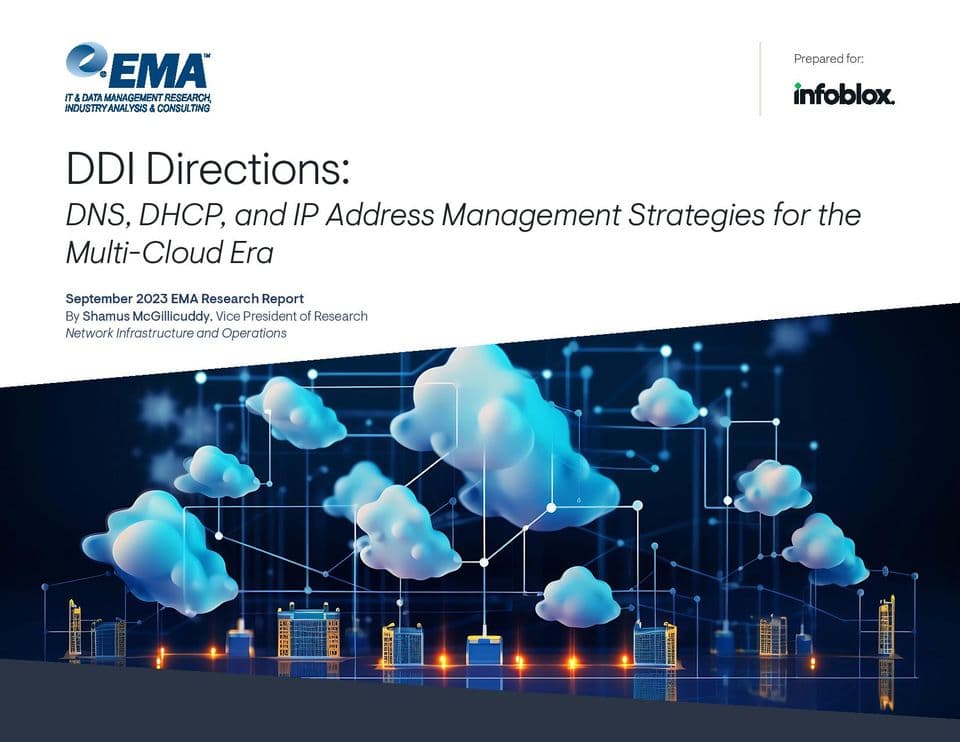
DNS, DHCP and IP Address Management Strategies for the Multi-Cloud Era
DNS, DHCP, and IP address management (DDI) are essential to network connectivity and communications. Yet, with the rise of hybrid and multi-cloud architectures in recent years, managing DDI has become far more
Ensuring Enterprise-grade Network Services for AWS
More enterprises every day are deploying workloads on public cloud infrastructures such as Amazon Web Services to reduce the time to deploy new applications, consolidate IT infrastructure for better analytical insights
Elsewhere in Cloud & IT Infrastructure
See the category →
Temco Logistics Race to Reinvent
Temco Logistics, a rapidly growing final-mile delivery provider handling 13–14 million deliveries annually, needed to modernize its technology foundation to keep pace with its expansion. Its legacy environment relied on

Accelerating SAP Cloud ERP Implementation for Wholesale Distributors
This white paper explores how Silver Touch Technologies is helping wholesale distributors accelerate SAP Cloud ERP implementation through proven industry expertise, standardized processes, and reusable implementation

eBook: Set a Course for Kubernetes Success
Enterprises Need to Leverage Kubernetes Everywhere.